Course method analysis
Flags solutions that use techniques your course never taught.
A correct answer reached by a method you never taught is worth a second look, whether it signals outside help, AI use, or just a student with prior background. Course method analysis compares each solution against your uploaded course materials and flags mismatches for your review.
How it works
- When you grade a question with analysis enabled, InteGrade reads the student's written work for that question.
- It retrieves the most relevant sections of your course materials, the actual notes you taught from.
- It compares the student's method against what those sections cover and reports a tier:
| Tier | Meaning |
|---|---|
| Green | Method aligns with the course |
| Yellow | Worth a glance; partially aligned or unclear |
| Red | Method not taught in class |
| Insufficient | Not enough written work to judge |
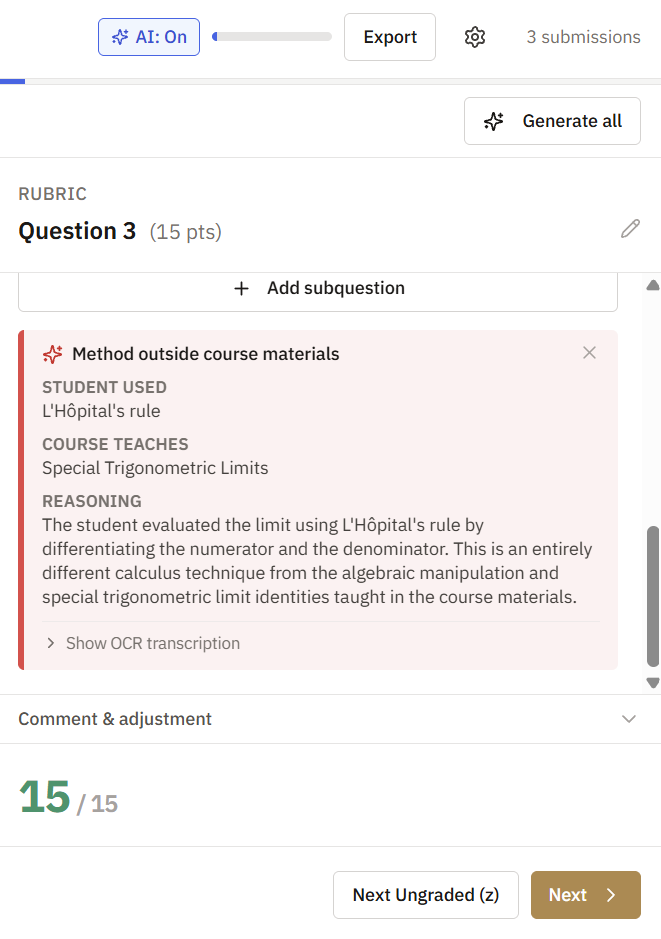
Each result shows its reasoning: what method the student used, what the course teaches, and which sections of your materials it compared against. You can also expand the raw transcription of the student's work to verify it read the page correctly.
Built to be conservative
The analysis defaults toward green and insufficient when uncertain. A red flag means it found something concrete, not a hunch. Even then, a flag is information for your judgment, never an accusation and never a grade. Plenty of red tiers have innocent explanations: a transfer student who learned L'Hopital's rule before your class reached it is not cheating.
Per-assignment and opt-in
Analysis only runs on assignments where you enabled it and uploaded course materials. The first submission you open takes a minute or two while submissions are read; the results are kept, so everything after is instant.